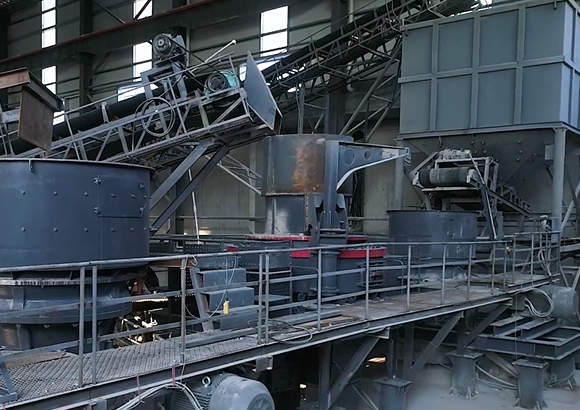
Impact crushers are widely used in Germany’s sand and gravel production lines due to their high efficiency and adjustable output gradation. These machines excel in processing medium-hard materials like limestone, granite, and recycled concrete, producing cubical-shaped aggregates ideal for construction.
A typical German-designed aggregate production line includes:
1. Primary Jaw Crusher: Coarse crushing (e.g., C120, feed size ≤700mm)
2. Secondary Impact Crusher: Fine crushing (e.g., Kleemann MR 130 Z EVO2, capacity up to 450 t/h)
3. Tertiary Cone Crusher/VSI Crusher: Shaping (e.g., CV218 VSI, producing 0-5mm sand)
4. Vibrating Screens: Multi-layer classification (e.g., Schenck Process HURRIKAN screens)
| Model | Max Feed Size | Capacity (t/h) | Power (kW) |
|---|---|---|---|
| Kleemann MR 110 Z EVO2 | 800mm | 350 | 248 |
| Hazemag AP-PH 1214E | 400mm | 250 | 160 |
| SBM REMAX 400 | 600mm | 400 | 300 |
Q1: What’s the typical service life of wear parts?
A: Blow bars last 30,000-100,000 tons depending on material abrasiveness (HB500 steel common).
Q2: How to control dust emission?
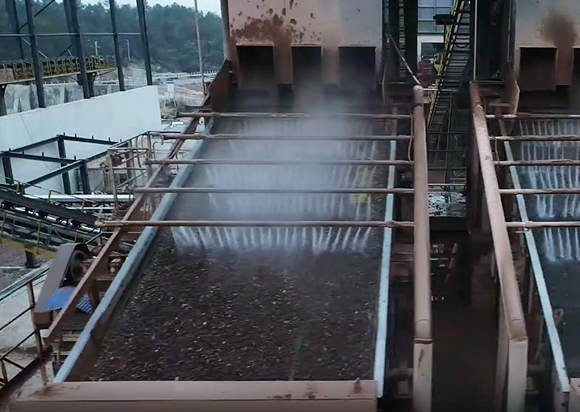
A: German models often integrate water spray systems or bag filters (dust ≤20 mg/m³).
Q3: Can impact crushers replace jaw+cone setups?
A: For limestone (200MPa), jaw-cone