Feldspar, a key raw material in ceramics and glass industries, requires efficient beneficiation to remove impurities like quartz and iron oxides. Its mineralogy dictates the selection of crushing, grinding, and separation equipment. A well-designed sand and aggregate production line ensures high-purity feldspar concentrates while optimizing energy consumption.
A typical feldspar processing line includes:
1. Primary Jaw Crusher: Reduces raw ore to ≤150mm (e.g., PE600×900 with 75kW motor).
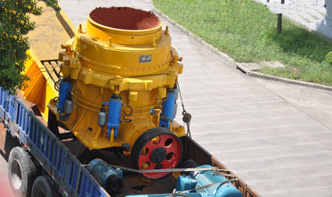
2. Secondary Cone Crusher: Fine-crushing to ≤30mm (e.g., CS160 with 250kW).
3. Tertiary Impact Crusher/Sand Maker: Produces 0-5mm particles (e.g., VSI1140 with 250t/h capacity).
4. Vibrating Screen: Multi-layer classification (e.g., 3YK3070 with 15° inclination).
| Equipment | Key Parameters |
|---|---|
| Jaw Crusher | Feed size: ≤500mm, Discharge: 50-150mm |
| Cone Crusher | Closed-side setting: 10-30mm, Capacity: 80-250t/h |
| Sand Maker | Input size: ≤50mm, Sand yield: ≥60% |
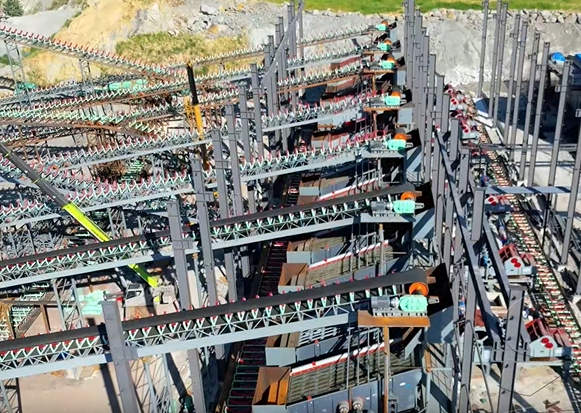
Magnetic separation (≥10,000 Gauss) removes iron-bearing minerals. Flotation (pH 2.5-3.5) separates feldspar from quartz. Dewatering screens (e.g., ZS3060) achieve <15% moisture content.
Q1: How to reduce over-crushing?
A: Use staged crushing with precise screen apertures.
Q2: Optimal feed size for sand makers?
A: ≤40mm ensures stable output gradation.
Q3: Iron content control?
A: Combine weak+strong magnetic separators (<0.