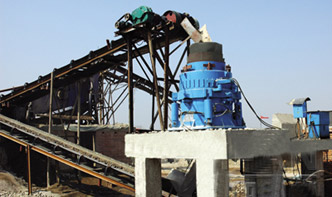
The hydraulic cone crusher is a critical component in sand and aggregate processing lines, offering superior crushing efficiency and particle shape control. Its advanced design integrates hydraulic adjustment, overload protection, and automated chamber clearing, making it ideal for hard rock crushing in quarries and mining operations.
Core parts include:
– Main Frame: High-strength cast steel for durability.
– Concave/Mantle: Manganese steel alloys (e.g., Mn18Cr2) with optimized profiles.
– Hydraulic System: Pressure relief valves (default setting: 220–250 bar) protect against tramp iron.
| Model | Max Feed Size (mm) | Capacity (t/h) | Power (kW) |
|---|---|---|---|
| HST100 | 185 | 45–213 | 90 |
| HPT300 | 240 | 120–580 | 315 |
A typical configuration pairs the cone crusher with:
1. Primary Jaw Crusher: For coarse reduction (e.g., C6X series).
2. Vibrating Screen: Multi-deck screens (3YK3070) for precise grading.
3. Sand Maker: VSI6X for shaping fine aggregates (<5mm).
Q: How to reduce excessive wear on concave?
A: Ensure feed size ≤80% of crusher opening and maintain proper CSS (Closed Side Setting).
Q: Frequent hydraulic pressure drops?
A: Check for oil leaks or contaminated hydraulic fluid (ISO VG46 recommended).
– Challenge: High silica content causing rapid wear.
– Solution: Upgraded to HPT500 with Mn22Cr3 liners, extending service life by 40%.
– Result: 550 t/h output meeting ASTM C33 spec for concrete aggregates.
For optimal performance