Kerala’s rock mining industry follows strict environmental and safety guidelines. Permits from the Department of Mining and Geology are mandatory, with emphasis on sustainable practices, noise/dust control, and land restoration. Quarries must maintain a minimum distance from residential areas and water bodies.
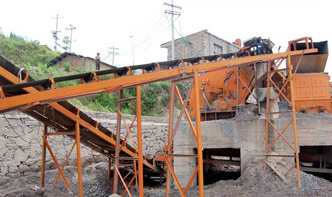
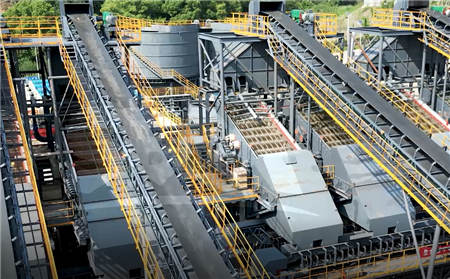
A modern crushing-sand production line typically includes:
1. Primary Jaw Crusher: Processes large rocks (e.g., 600×900mm feed size, 50-150tph capacity).
2. Secondary Cone Crusher: Fine crushing (e.g., GP300 model, 200-300tph output).
3. Tertiary Impact Crusher: Shaping aggregates (e.g., VSI1140, 0-5mm sand yield).
4. Vibrating Screens: Multi-layer classification (e.g., 3YK3070, 50-800t/h processing).
| Equipment | Model | Key Parameter |
|---|---|---|
| Jaw Crusher | PE750×1060 | Feed: 630mm; Output: 80-180tph |
| Cone Crusher | HPT300 | Max Feed: 240mm; Power: 315kW |
| Sand Maker | VSI5X1145 | Capacity: 70-640tph; Rotor Speed: 1700rpm |
A Kerala-based project processed granite into 0-5mm M-sand and 20mm aggregates using a 200tph line with PE600×900 jaw crusher + HST160 cone crusher + VSI5X9532 sand maker. Achieved 95% passing IS383 standards.
Q1: How to reduce dust in crushing?
*A1:* Use water spray systems + enclosed conveyors + bag filters.
Q2: Optimal crusher for hard basalt?
*A2