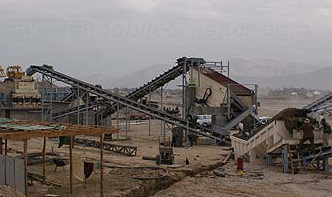
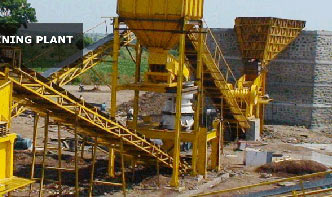
In crushed stone and sand production lines, silos play a critical role in material storage and buffer management. The capacity calculation directly impacts production efficiency and equipment matching.
The standard formula for cylindrical silo capacity:
Capacity (m³) = π × r² × h × ρ × η
Where:
– r = radius (m)
– h = effective height (m)
– ρ = bulk density (t/m³)
– η = utilization factor (typically 0.8-0.9)
Common bulk densities:
– Crushed granite: 1.6 t/m³
– Manufactured sand: 1.5 t/m³
– Mixed aggregates: 1.7 t/m³
| Silo Type | Diameter (m) | Capacity (t) | Discharge Angle |
|---|---|---|---|
| Intermediate Buffer | 3.5 | 80 | ≥55° |
| Finished Product | 6.0 | 300 | ≥60° |
| Cement Storage | 4.5 | 150 | – |
Q: How to prevent material bridging?
A: Proper hopper design with ≥60° slope and vibration devices.
Q: Typical silo height-to-diameter ratio?
A: Optimal range is 1.5:1 to 2:1 for most aggregates.
Q: Material residence time?
A: Normally 4-8 hours depending on downstream process requirements.
A 500tph granite processing plant in Malaysia implemented three Φ6×12m silos with segmented compartments for different aggregate sizes (0-5mm, 5-10mm, 10-20mm). The design achieved 98% material flow efficiency through:
1) Cone-in-cone discharge system
2) Air cannons at critical points
3) Moisture control below 3%
Proper silo sizing reduced equipment idle time