The beneficiation of iron ore involves a series of processes to improve its quality and remove impurities. Below is a simplified flow chart:
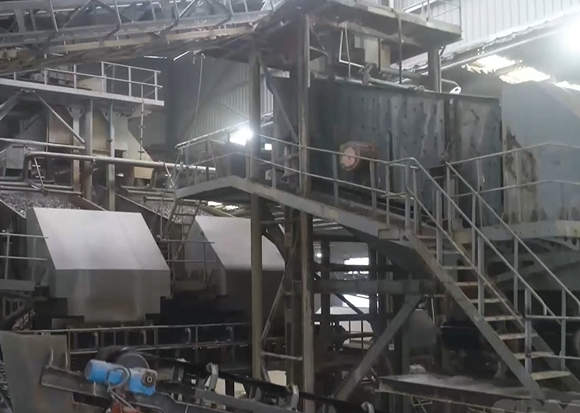
1. Crushing: Primary jaw crushers reduce large iron ore lumps to ~150mm. Secondary cone crushers further crush to ~25mm.
2. Screening: Vibrating screens separate oversize materials for re-crushing.
3. Grinding: Ball mills grind the ore to 75-150μm for liberation.
4. Magnetic Separation: Drum separators recover magnetite (Fe3O4) with >95% purity.
5. Gravity Separation: Spiral classifiers or jigs remove silica/phosphorus for hematite (Fe2O3).
6. Flotation: Reverse flotation removes sulfur/phosphorus using collectors (e.g., fatty acids).
7. Thickening & Filtration: Disc filters dewater concentrates to ~10% moisture.
| Equipment | Model Example | Key Parameters |
|——————–|—————|————————————-|
| Jaw Crusher | PE600×900 | Feed size: 500mm, Capacity: 50-160t/h |
| Ball Mill | MQG2700×3600 | Capacity: 12-80t/h, Power: 400kW |
| Magnetic Separator | CTB718 | Field intensity: 1500Gs, Capacity: 50t/h |
Q1: What’s the recovery rate of iron ore beneficiation?
A: Typically 85-92% for magnetite, 60-75% for hematite after multi-stage processing.
Q2: How to reduce energy consumption?
A: Use HPGR (High-Pressure Grinding Rolls) instead of ball mills, cutting energy use by 20-30%.
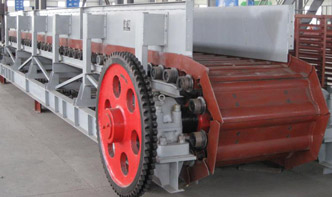
Project: Liaoning Magnetite Plant, China
Solution: Two-stage crushing + wet magnetic separation + thickener. Achieved 90% Fe grade at 1200t/d capacity.