The journey of gold extraction from raw ore to market-ready product involves specialized crushing and grinding equipment. Here’s a streamlined approach:
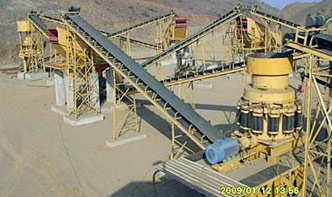
Primary crushing starts with jaw crushers (e.g., PE-600×900, capacity 50-160 t/h), reducing ore to ≤150mm. Secondary cone crushers (like PY-1200, output 40-100 t/h) further refine material to ≤30mm. For fine grinding, ball mills (MQG-1500×3000, capacity 2-5 t/h) achieve ≤0.074mm particles.
| Equipment | Model | Capacity | Output Size |
|---|---|---|---|
| Jaw Crusher | PE-600×900 | 50-160 t/h | ≤150mm |
| Cone Crusher | PY-1200 | 40-100 t/h | ≤30mm |
| Ball Mill | MQG-1500×3000 | 2-5 t/h | ≤0.074mm |
Vibrating screens (YK-2460, processing 60-800 t/h) classify materials, while belt conveyors (B800×20m) transport crushed ore. Cyanidation or flotation systems follow grinding for gold separation.
Q: What’s the energy consumption?
A: A complete line typically consumes 25-35 kWh/t.
Q: How to control dust?
A: Wet suppression systems or bag filters reduce dust to <10mg/m³.
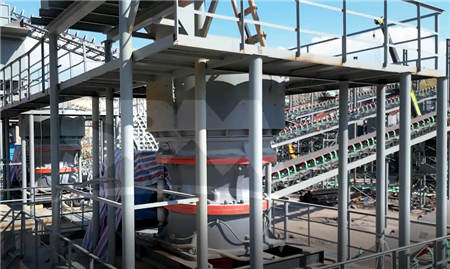
A Tanzanian project processed 500t/day quartz gold ore using:
1. PE-750×1060 jaw crusher
2. HST315 cone crusher
3. MQG2100×4500 ball mill
Recovery rate reached 92% through CIP system.
This configuration demonstrates how proper equipment selection maximizes gold recovery while maintaining operational efficiency