Ballast production requires robust yet compact crushing solutions to meet strict railway specifications. Small impact crushers (30-100 tph capacity) are ideal for processing hard rocks like basalt and granite into uniformly graded aggregates (typically 25-50mm).
1. Primary Jaw Crusher: Coarse reduction (Feed size: ≤500mm, Output: 100-150mm)
2. Secondary Impact Crusher: Cubical shaping (Rotor diameter: 800-1200mm, Max feed: 250mm)
3. Tertiary Vertical Shaft Impactor: Final grading control (Throughput: 50-80tph)
4. Multi-deck Vibrating Screen: Precise sizing (3-4 deck configurations)
| Model | Max Feed (mm) | Capacity (tph) | Power (kW) |
|---|---|---|---|
| PF-1010 | 350 | 50-80 | 55-75 |
| CI5X1010 | 400 | 70-120 | 90-110 |
| RM70GO! | 650 | 90-150 | 160 |
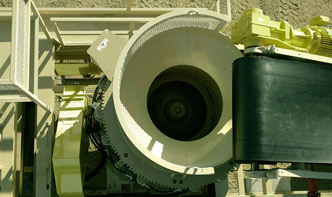
• Moisture content control (<3% for screening efficiency)
• Wear-resistant martensitic steel for impact plates (Brinell hardness ≥380)
• Closed-circuit design with recirculating oversize material
• Noise suppression to meet 85dB(A) at 1m distance
Q: What’s the typical ballast gradation requirement?
A: EN 13450 specifies 22.4-63mm with <5% fines (<22.4mm).
Q: How to minimize flaky particles?
A: Use impact crushing instead of jaw crushing for secondary stage, maintain proper rotor speed