Here’s a professional article tailored to your requirements:
—
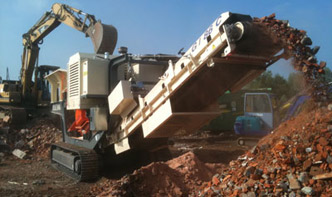
Crushed sand, also known as manufactured sand (M-Sand), has become a critical material in modern concrete production. Unlike natural river sand, crusher sand is produced by crushing hard granite or basalt rocks in controlled conditions, ensuring optimal particle shape, gradation, and low impurity content. For concrete applications, it offers superior workability, strength, and durability while addressing environmental concerns tied to river sand mining.
Crusher sand’s engineered properties make it preferable for concrete mixes:
– Consistent Gradation: Precise crushing and screening yield uniform particle sizes (0–4.75mm), reducing voids in concrete.
– Enhanced Bonding: Angular particles improve cement adhesion, boosting compressive strength by 10–15% compared to rounded river sand.
– Low Moisture Absorption: Typically <2%, minimizing water-cement ratio fluctuations.
– Eco-Friendly: Eliminates reliance on unsustainable riverbed excavation.
A high-quality M-Sand production line requires robust crushing and shaping machinery:
1. Primary Jaw Crusher (e.g., PE600×900): Processes raw rock into 150mm aggregates.
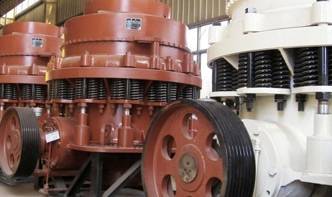
2. Secondary Cone Crusher (e.g., HPT300): Further reduces size to ≤40mm with cubical shaping.
3. Tertiary Impact Crusher/VSI (e.g., VSI6X1263): Critical for final shaping—produces ≤5mm sand with <15% flakiness index.
4. Sand Washer (e.g., XSD3620): Removes excess fines (<75μm) to meet ASTM C33 standards.
| Parameter | Value | Standard |
|---|---|---|
| Fineness Modulus | 2.6–3.0 | IS 383 Zone II |
| Silt Content | <3% | AASHTO T11</td
Knowledge |