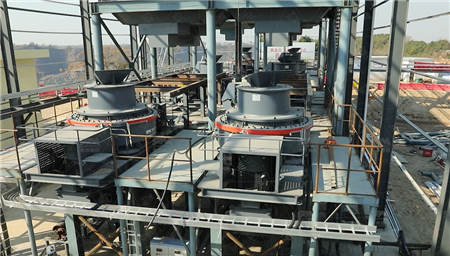
Modern sand and aggregate production lines rely heavily on high-efficiency cone crushers for secondary and tertiary crushing. These crushers deliver superior particle shape, high throughput, and low operating costs, making them ideal for producing high-quality construction aggregates.
A typical sand and aggregate production line includes:
– Primary Jaw Crusher: For coarse crushing of raw materials.
– High Efficiency Cone Crusher: For intermediate/fine crushing (e.g., HP300 or HPT500 models).
– Vertical Shaft Impact Crusher (VSI): For shaping and sand-making.
– Vibrating Screens: For grading finished products.
The latest cone crushers feature:
– Advanced Hydraulic System: Ensures stable operation and overload protection.
– Multi-Cavity Design: Adapts to various feed sizes (e.g., 50–300mm).
– High Crushing Ratio: Up to 1:10, reducing recirculation load.
| Model | Max Feed Size (mm) | Capacity (t/h) | Power (kW) |
|---|---|---|---|
| HP300 | 230 | 120–350 | 220 |
| HPT500 | 330 | 250–700 | 400 |
Q1: How to reduce wear in cone crushers?
A: Use proper feed distribution, maintain correct CSS (closed-side setting), and opt for wear-resistant liners.
Q2: What’s the ideal moisture content for feeding?
A: Below 5% to prevent clogging and maintain efficiency.
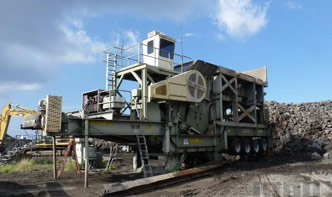
A granite processing plant in Malaysia adopted an HP300 cone crusher, achieving:
– Output: 280 t/h of 10–20mm aggregate.
– Energy Savings: 15% lower power consumption vs. traditional models.