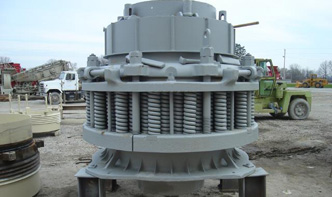
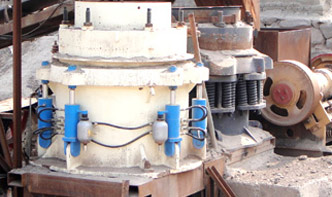
Cone crushers are critical equipment in modern aggregate production lines, offering precise particle size control through adjustable crushing chambers and eccentric throws. The product curve—a graphical representation of particle size distribution—directly impacts downstream processes like screening and shaping.
A complete production line typically includes:
1. Primary jaw crusher (e.g., 600×900mm inlet)
2. Secondary cone crusher (e.g., HP300 with 220kW motor)
3. Tertiary VSI crusher for shaping
4. Multi-deck vibrating screens
5. Sand washing system
| Model | Max Feed(mm) | CSS Range(mm) | Capacity(t/h) |
|---|---|---|---|
| HP200 | 210 | 6-38 | 90-300 |
| GP300 | 175 | 8-40 | 100-350 |
| S240 | 235 | 10-50 | 120-400 |
The shape of product curves depends on:
– Closed Side Setting (CSS)
– Eccentric speed (typically 600-800 rpm)
– Liner profile (standard/fine/coarse)
– Feed material characteristics
Q: How to adjust product gradation?
A: Modify CSS first, then consider changing crushing chamber liners.
Q: Why does output contain oversize particles?
A: Check for worn mantles/concaves or improper CSS setting.
Q: Optimal feed size for cone crushers?
A: Should not exceed 80% of crusher’s feed opening dimension.
Location: Malaysia | Output: 250tph
Configuration:
– Primary CJ412 jaw crusher
– Secondary CH440 cone (CSS=28mm)
– Tertiary CV218 VSI
Final products:
– 0-5mm sand (38%)
– 5