The Philippines’ growing infrastructure demands high-quality aggregates, making jaw crushers the primary choice for hard rock processing. Our JC-series jaw crushers feature deep crushing chambers and optimized kinematics, achieving 15-20% higher capacity than conventional models.
| Model | Feed Opening(mm) | Max Feed Size(mm) | Capacity(t/h) | Power(kW) |
|---|---|---|---|---|
| JC3624 | 900×600 | 500 | 80-180 | 75 |
| JC4836 | 1200×900 | 750 | 150-350 | 132 |
| JC5650 | 1500×1250 | 1000 | 300-700 | 250 |
A complete Philippine aggregate plant typically includes:
1. Primary jaw crusher (for 600mm rocks)
2. Secondary cone crusher (producing 40mm material)
3. Tertiary VSI crusher (for shaped sand)
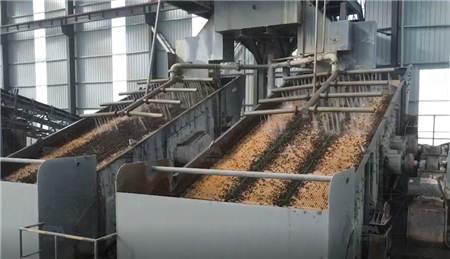
4. Multi-layer vibrating screens
5. Sand washing system
A: Why does my jaw plate wear quickly?
A: Typically caused by feeding oversize material or processing abrasive basalt without proper alloy plates.
A: How to reduce vibration?
A: Check foundation bolts (torque to 350Nm) and ensure feed distribution is even across crushing chamber.
A 200tph plant achieved 98% uptime using JC4836 jaw crusher paired with HS36 cone crusher, producing:
– 0-5mm sand (35%)
– 5-20mm aggregate (45%)
– 20-40mm base material (20%)
For volcanic rock applications, we recommend manganese steel jaws with Br